
Erlang is a functional, general-purpose, concurrent programming language and garbage-collected runtime environment supported and maintained by Ericsson OTP product unit.
Erlang programming language was built for concurrency, fault tolerance, and distributed application architectures. OTP (Open Telecom Platform) is a collection of libraries and middleware for Erlang. This guide will show you how you can install and use the latest release of Erlang/OTP on Ubuntu 22.04|20.04|18.04 LTS.
1. Install required dependencies
Run the following commands to install required packages.
sudo apt update
sudo apt install curl software-properties-common apt-transport-https lsb-release
2. Add Erlang Repository
Once you have imported the key, add the repository to your Ubuntu system by running the following commands:
curl -1sLf 'https://dl.cloudsmith.io/public/rabbitmq/rabbitmq-erlang/setup.deb.sh' | sudo -E bashExpected command execution output:
Executing the  setup script for the 'rabbitmq/rabbitmq-erlang' repository ...

   OK: Checking for required executable 'curl' ...
   OK: Checking for required executable 'apt-get' ...
   OK: Detecting your OS distribution and release using system methods ...
 ^^^^: ... Detected/provided for your OS/distribution, version and architecture:
 >>>>:
 >>>>: ... distro=ubuntu  version=22.04  codename=jammy  arch=x86_64
 >>>>:
   OK: Checking for apt dependency 'apt-transport-https' ...
   OK: Checking for apt dependency 'ca-certificates' ...
   OK: Checking for apt dependency 'gnupg' ...
   OK: Checking for apt signed-by key support ...
   OK: Importing 'rabbitmq/rabbitmq-erlang' repository GPG keys ...
   OK: Checking if upstream install config is OK ...
   OK: Installing 'rabbitmq/rabbitmq-erlang' repository via apt ...
   OK: Updating apt repository metadata cache ...
   OK: The repository has been installed successfully - You're ready to rock!
3. Install Erlang package
The last step is the actual installation of Erlang. Update your system package list and install Erlang:
sudo apt update
sudo apt install erlang
To start Erlang shell, run the command:
$ erl
Erlang/OTP 26 [erts-14.0.2] [source] [64-bit] [smp:2:2] [ds:2:2:10] [async-threads:1] [jit:ns]

Eshell V14.0.2 (press Ctrl+G to abort, type help(). for help)
1> ^G
 --> q
After the shell is started, another prompt is printed. You can test by writing a simple Hello World Erlang code.
$ vim hello.erl
% This is a test Hello World Erlang Code
-module(hello).
-import(io,[fwrite/1]).
-export([helloworld/0]).

helloworld() ->
   fwrite("Hello, Erlang World!\n").
Compile it from the Erlang shell. Don’t forget the full-stop (“period“) at the end of each command.
$ erl
Erlang/OTP 21 [erts-10.1] [source] [64-bit] [smp:2:2] [ds:2:2:10] [async-threads:1]

Eshell V10.1  (abort with ^G)
1> c(hello).
{ok,hello}
Then run the program from the Erlang shell:
2> hello:helloworld().
Hello, Erlang World!
ok
3> ^G
--> q
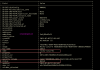
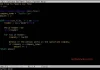
See below screenshot:

You now have a working Erlang on your Ubuntu 22.04|20.04|18.04 LTS server/Desktop. Enjoy building and running your applications powered by Erlang. All the best!.


























































I used these instructions a while ago and they worked fine, but recently I’ve been getting a Forbidden error because “https://dl.bintray.com/rabbitmq-erlang/debian focal InRelease” is no longer signed. I just now tried importing the Erlang GPG Key again, but it didn’t help. Any thoughts? Thanks!
Hi,
Tested it works. The repo URL https://packages.erlang-solutions.com/ubuntu focal contrib and not https://dl.bintray.com/rabbitmq-erlang/debian focal as you shared.
Could it be typo?
Ah, I see I commented on the wrong post! Sorry about that. I installed from here: https://computingforgeeks.com/how-to-install-latest-rabbitmq-server-on-ubuntu-linux/ which does reference the dl.bintray.com location. That one doesn’t seem to work anymore.