Three Z-Wave 800 sticks are worth buying for Home Assistant right now, and picking the wrong one usually comes down to a single spec nobody puts on the box: the radio frequency baked in at the factory. Buy a stick meant for the wrong region and it will not talk to a single one of your sensors. Get that part right and any of these three will run a serious smart home for years.
This guide compares the best Z-Wave 800 stick for Home Assistant across the three that matter: the officially recommended Home Assistant Connect ZWA-2, the value Zooz ZST39, and the dual-radio Aeotec Z-Stick 10 Pro. All three use the 800-series Silicon Labs chip, all three unlock Z-Wave Long Range, and all three plug straight into the Z-Wave JS integration. The differences are range, whether you also want Zigbee on the same stick, and how much you want to spend.
Current as of July 2026.
The quick picks
Best overall: the Home Assistant Connect ZWA-2. It is the one Nabu Casa built specifically for Home Assistant, the long external antenna genuinely reaches further, and it runs a classic mesh and a Long Range network at the same time. If you only pick one, pick this.
Best value: the Zooz ZST39. Same 800 chip, same Long Range support, roughly half the price. It is tiny, it disappears behind the server, and it does everything most homes need.
Best if you want Z-Wave and Zigbee in one stick: the Aeotec Z-Stick 10 Pro. It carries an 800-series Z-Wave radio and a Zigbee 3.0 radio in a single dongle, so one USB port covers both protocols.
How we picked
This is a spec and documentation comparison, and it is honest to say so up front. No stick here was put through a month-long range test in the same house, so you will not find invented distance numbers below. What this guide does is pull every spec from the manufacturer pages, then cross-check the two things that actually decide the purchase against primary sources: which chip generation each stick uses, and how Z-Wave Long Range and regional frequencies really work.
Those frequency and Long Range facts come straight from Silicon Labs (who make the chip), the Home Assistant supported-adapter list, and the Z-Wave JS project. That is the part AI-generated shopping lists get wrong, and it is the part that leaves people with a stick that pairs zero devices.
Why a Z-Wave 800 stick, and the region trap
The 800 series (Silicon Labs’ EFR32ZG23 chip) is the current generation. Long Range actually debuted on the 700 platform, but the 800 series is where it comes as standard alongside better radio range, longer battery life on end devices, and lower latency. The 700 series already did S2 security, so security is not the reason to move up; the newer radio is. For a brand-new setup there is no reason to buy 700 when 800 costs the same, and the older 500-series controllers like the GoControl HUSBZB-1 are legacy at this point.
Now the trap. Z-Wave runs on a sub-gigahertz band that is different in every region, and the frequency is chosen when you buy the stick. In North America Z-Wave lives at 908.42 MHz; in Europe and the UK it is 868.42 MHz; Australia and New Zealand use 921.42 MHz. A US stick and a EU sensor cannot hear each other. Buy the SKU for the country your devices are sold in.
Long Range adds a wrinkle on top of the region rule. It runs on its own dedicated channels, not the classic mesh frequency: roughly 912 and 920 MHz in North America, and 864 to 866 MHz in Europe. Long Range started as a North America feature; European Z-Wave Long Range was standardized in 2024 and became usable through 2025, though the pool of Long-Range-capable devices is still larger in North America than in Europe. Two things stay true wherever you are: Long Range only works within your region’s band, and it needs both a Long-Range-capable controller and Long-Range-capable end devices. So buy the stick for your country, confirm the sensors you want come in a Long-Range version, and make sure the stick’s firmware is recent enough to enable it.
What does Long Range actually buy you? Classic Z-Wave is a mesh that tops out at 232 nodes and relies on mains-powered devices to relay signal. Long Range is a star topology: each device talks directly back to the hub, the network scales into the thousands of nodes, range jumps from the usual 25 to 30 metres indoors to well over 100 metres, and battery devices last longer because they transmit at lower power when they are close. The two run side by side, so your existing mesh keeps working while far-flung sensors join over Long Range. You do need Long-Range-capable end devices to use it; the controller alone is only half the equation.
Z-Wave 800 sticks compared
Here is how the three stack up on the specs that change the decision.
| Spec | HA Connect ZWA-2 | Zooz ZST39 | Aeotec Z-Stick 10 Pro |
|---|---|---|---|
| Chip | Si Labs ZG23 (800) | Si Labs 800 | Si Labs 800 |
| Radios | Z-Wave | Z-Wave | Z-Wave + Zigbee 3.0 |
| Long Range | Yes, mesh + LR at once | Yes | Yes |
| Antenna | External, 31 cm | Internal (USB stick) | Internal (USB stick) |
| Connector | USB-C | USB-A | USB-A |
| Driver | Z-Wave JS | Z-Wave JS | Z-Wave JS + Zigbee2MQTT/ZHA |
| Price band | ~$65 to $70 | ~$28 to $35 | ~$60 to $70 |
1. Home Assistant Connect ZWA-2
Nabu Casa, the company behind Home Assistant, designed this one from scratch for the platform, and it is the only adapter Home Assistant lists as officially recommended. The giveaway is the antenna: instead of the usual sub-10-centimetre dongle, the ZWA-2 stands 31 centimetres tall on a weighted base, tuned to Z-Wave’s wavelength. That is the single biggest range upgrade you can make short of adding repeaters.
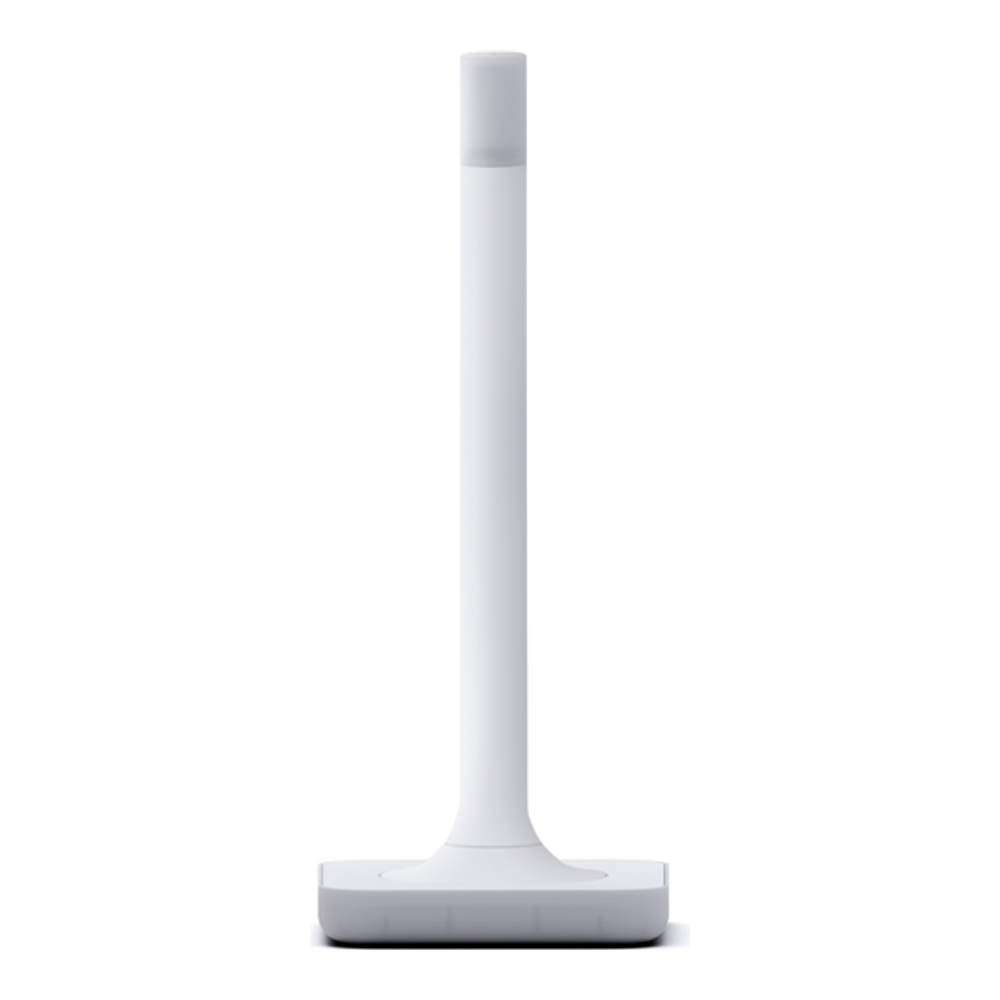
Under the antenna it pairs a Silicon Labs ZG23 Z-Wave radio with an ESP32-S3, connects over USB-C, and runs a standard Z-Wave mesh and a Z-Wave Long Range network at the same time. It shows up in the Z-Wave JS add-on with a setup wizard, and because Nabu Casa maintains it, firmware and integration support are not going to be abandoned.
Who it is for: anyone building or rebuilding a Z-Wave network who wants the best range and the safest long-term bet, and does not mind a device that sits out on the desk rather than hiding behind the server.
Skip it if: you are tight on space or budget and your devices are all within normal mesh range. The antenna is the reason to buy it, and if you do not need the reach you are paying double for nothing.
2. Zooz ZST39
The Zooz ZST39 is the stick most people should buy. It has the same 800-series chip and the same Long Range support as the ZWA-2, in a plain USB-A dongle that costs roughly half as much. Home Assistant lists it explicitly as a Long-Range-capable 800 adapter, and it runs on the same Z-Wave JS driver with no special handling.
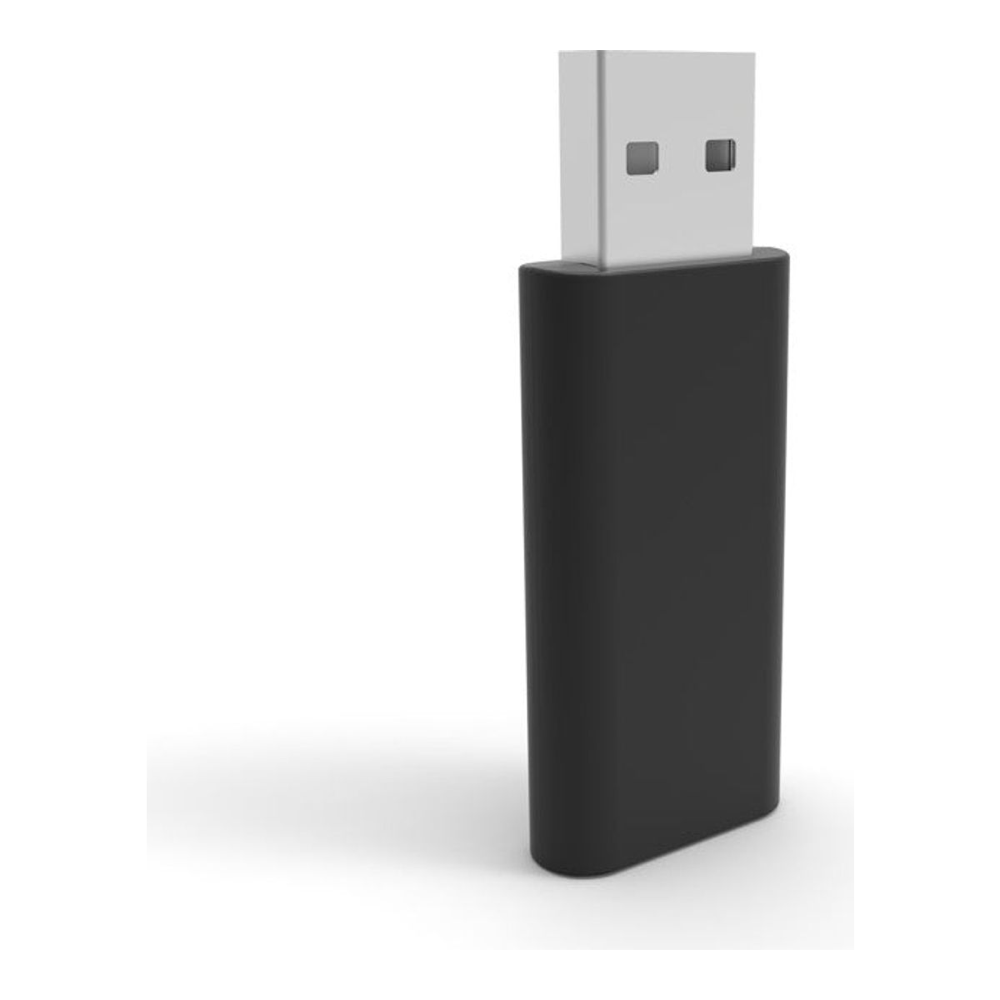
What you give up versus the ZWA-2 is the external antenna, so raw range is shorter, and the internal antenna sits right at the USB port where host interference is worst. A short extension cable fixes most of that. Zooz backs it with a five-year warranty once you register, which is unusual at this price.
Who it is for: the default choice for most homes. If you are not chasing maximum range and you want to spend your money on actual sensors instead of the controller, this is it.
Skip it if: you have a large or multi-storey house where the extra reach of the ZWA-2’s antenna would save you buying repeaters, or you also want Zigbee on the same stick.
3. Aeotec Z-Stick 10 Pro
The Z-Stick 10 Pro is the one to buy when you want Z-Wave and Zigbee from a single USB port. Aeotec put an 800-series Z-Wave radio and a Zigbee 3.0 radio in one dongle, so it can run your Z-Wave network through Z-Wave JS and your Zigbee network through Zigbee2MQTT or ZHA at the same time. For a homelab mini PC or Raspberry Pi with limited USB ports, that is genuinely useful.
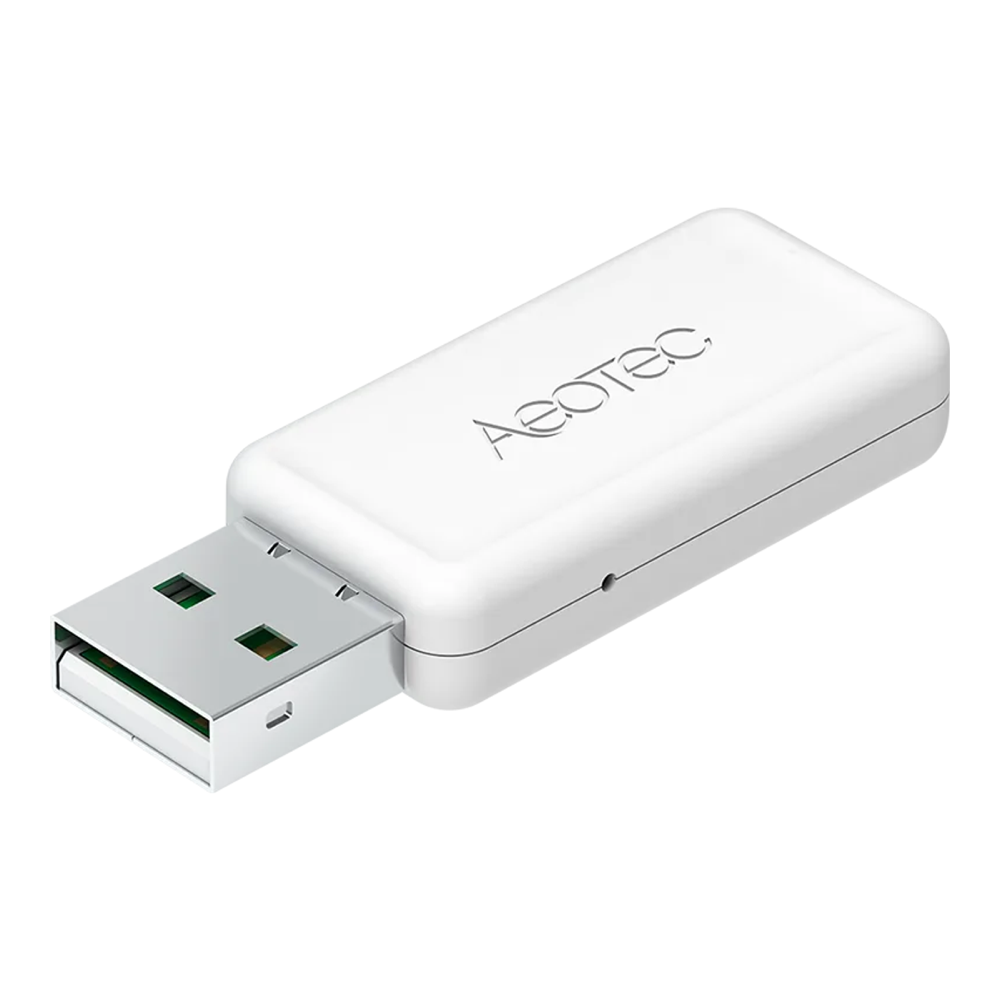
On the Z-Wave side it is a full 800-series controller with Long Range, SmartStart pairing by QR code, and native S2 security. Aeotec rates the Long Range reach at more than 100 metres indoors and up to 1000 metres outdoors. It ships in region variants (the ZWA060-A is the 908.42 MHz North America model, with separate EU and Australia versions), so the same buy-your-region rule applies here too.
Who it is for: people running both Z-Wave and Zigbee who would rather manage one dongle than two, especially on a small host with few USB ports.
Skip it if: you only run Z-Wave. A single-protocol stick is cheaper, and separating your two radios onto their own dongles makes each one easier to move or replace later.
What to check before you buy
A few things decide whether the stick you order actually works, and none of them are about brand.
- Buy your region’s frequency. This is the one that bites people. Match the stick to where your devices were sold: 908.42 MHz for North America, 868.42 MHz for Europe and the UK, 921.42 MHz for Australia and New Zealand. Long Range works in North America and, since 2024, Europe, but on different channels in each, so it still has to match your region and you need Long-Range-capable devices to use it.
- Use a short USB 2.0 extension cable. Plugging any Z-Wave stick straight into the back of a mini PC puts its radio next to USB 3.0 ports and a metal case, which are noisy. A cheap 30-centimetre extension gets it into clear air and measurably improves reliability.
- Pick 800 over 700. They cost about the same now, and 800 is the safe default for Long Range and carries the newer, longer-range radio. Older 500-series controllers are legacy; do not start a new network on one.
- Long Range needs both ends. The controller is only half of it. You also need Long-Range-capable sensors and switches to benefit. Your existing classic devices keep running on the mesh either way.
- Migrating from an old stick is painless. Z-Wave JS can back up and restore your network, so moving from a 700 stick to one of these keeps all your paired devices, as long as the region matches.
Whichever stick you land on, it plugs into the same Z-Wave JS integration. If you are still standing the server up, our guides on installing Home Assistant on Ubuntu and running it in Docker both cover the base setup, and the best mini PC for Home Assistant is the box to run it on. If you also run Zigbee, the companion Zigbee coordinator guide covers that half of the radio question.
Which one to pick
For most people the Zooz ZST39 is the right call: it is the cheapest way onto the 800 series with Long Range, and paired with a short extension cable it covers a normal house without complaint. Step up to the Home Assistant Connect ZWA-2 if range is your problem, if you want the officially supported hardware, or if you are building a network you want to leave alone for years. Choose the Aeotec Z-Stick 10 Pro only when you want Z-Wave and Zigbee sharing one dongle. Get the frequency right for your country first, and any of the three will serve you well.