Kubernetes Networking in Rancher: Services and Ingress
Every Kubernetes cluster needs a networking layer that actually works, and Rancher-managed clusters (RKE2 and K3s) ship with…
Containers are ephemeral by design. When a pod dies, everything inside it vanishes. That works fine for stateless…
Running Rancher as a single Docker container works for a lab. It does not work for production. One…
A single RKE2 server node works fine for labs and development, but production workloads need something more resilient.…
If you’ve been paying Docker Desktop license fees for local container development, there’s a better option. Rancher Desktop…
RKE2 (also called RKE Government) is Rancher’s next-generation Kubernetes distribution built for security-conscious environments. Unlike K3s, which optimizes…
K3s strips Kubernetes down to a single binary under 100MB. No etcd cluster, no cloud-controller bloat, no separate…
Managing Docker on a single host is a script. Managing it on five, twenty, or fifty hosts the…
Managing one Kubernetes cluster is straightforward. Managing three or four across dev, staging, and production gets messy fast.…
Docker gives you the cleanest way to run GitLab CE on a server you control. Everything (PostgreSQL, Redis,…
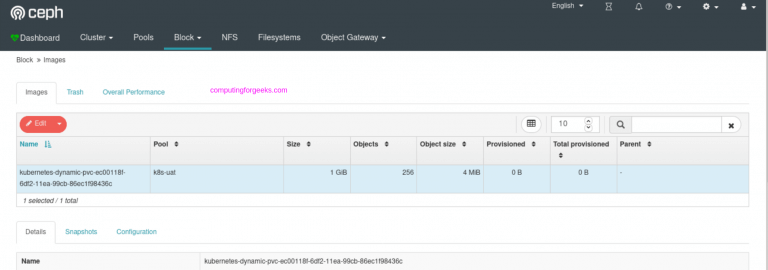
Ceph RBD (RADOS Block Device) provides persistent block storage for Kubernetes pods. Each RBD volume is a block…
Most FreeIPA guides walk you through a bare-metal install that takes over DNS, Kerberos, and LDAP on the…