


Email has especially proven valuable for businesses trying to grow their customer base. After all, over 4.6 billion people use email worldwide, making it one of the best ways to connect with decision makers.
But none of that matters if your emails never make it to the inbox. According to EmailTooltester, the average email deliverability rate is 83.1%, which means that nearly 17% of emails never reach their intended recipient.
If you’re building out your sales outreach strategy or looking to get better results from your email campaigns, email verification tools are your first step to landing more deals. These eight email verifiers will help you keep your lists clean and your deliverability rates high.
Instantly
Instantly’s verifier checks syntax, domain setup, and server response to predict deliverability before you send. You can run Instantly email verification when importing leads, then turn on warmup to build sending reputation safely. The warmup feature mimics real email interactions across a pool of accounts and includes a deliverability dashboard that tracks inbox vs spam placement, so you know when an account is ready for outreach. This keeps you compliant with stricter sender requirements from Gmail and Outlook by reducing bounces, complaints, and sudden sending spikes.
Instantly also offers a domain and authentication checker. The one-click bulk domain tester scans target domains in one click to confirm they have the right records for reliable delivery. The platform combines verification with a deliverability toolkit that includes inbox placement tests, blacklist monitoring, and content spam analysis.
Pros
- Integrated with outreach flow, so reps actually use it (no CSV shuffle).
- Bulk and quick checks to prep new lists without slowing campaigns.
- Helps reduce hard bounces that damage reputation and inbox placement.
- Simple path to comply with tightening sender rules.
- Clear handoff to sending, which supports better testing cadence.
Cons
Instantly prioritizes sending and deliverability. If you want heavy profile or firmographic enrichment, you will pair it with a separate data tool.
NeverBounce
NeverBounce stops bad data before it enters your system and keeps lists sale-ready. NeverBounce Sync connects its verifier directly to tools like HubSpot, Salesforce, Mailchimp and others to continuously re-verify contacts. Instead of running one-off manual cleanups, your lists stay fresh in the background, reducing bounce spikes that can hurt deliverability as you scale.
Pros
- API to validate emails as they are submitted, with clear results like valid, invalid, disposable, catch-all, or unknown.
- Process large lists quickly and export clear keep/remove segments.
- Native and third-party integrations make it easy to automate hygiene across CRMs rather than fumbling with manual uploads
Cons
- Some reviewers say precision on edge cases can vary, so teams should set sending rules for catch-all or unknown results on high-stakes campaigns.
- Cost sensitivity when verifying frequently or at a large scale, so budgeting per-check spend matters.
ZeroBounce
ZeroBounce helps teams lower hard bounces and keep sender reputation healthy by removing invalid, disposable, and risky emails before a campaign goes live. The platform’s Inbox Placement Test uses seed addresses across major providers to show exactly where your emails will land before you launch. This gives you a preview of potential problems, so you can adjust content, authentication, or volume before damage is done.
Pros
- API to block fake, invalid, or high-risk addresses, reducing bounce-driven reputation dips.
- Auto-validation inside connected platforms so new contacts are checked as they’re added.
- ZeroBounce markets 99.6% accuracy and is widely used for bulk jobs.
Cons
- Pricing can feel high when verifying frequently or at scale, so plan your credit usage.
- ZeroBounce labels catch-alls, but explains they cannot be fully validated without sending.
MillionVerifier
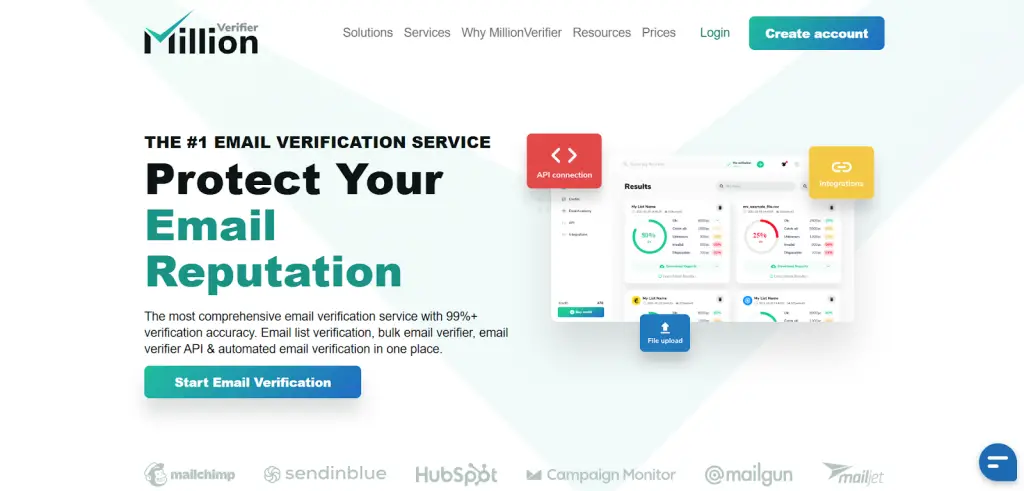
MillionVerifier’s Smart Verify blends SMTP checks with real sending data to reduce unknown and catch-all results. You get a 100% money-back guarantee if hard bounces exceed 4% on verified emails within seven days, so there’s real protection for your sender reputation. The platform advertises a 99% accuracy rate and competitive pricing at scale, which is important when you verify weekly rather than every few months.
Pros
- Lower per-credit costs make weekly list hygiene practical for high-volume teams.
- Real-time API lets you block bad signups at the form.
- Clear Good, Risky, Bad outputs and broad integrations streamline prep for sends and reduce manual cleanup.
Cons
- Catch-all addresses are not verified and land in the Risky bucket, so you will still need sending rules for those segments.
- Some users report slower support and billing issues, which is worth noting if speed matters to you.
BriteVerify
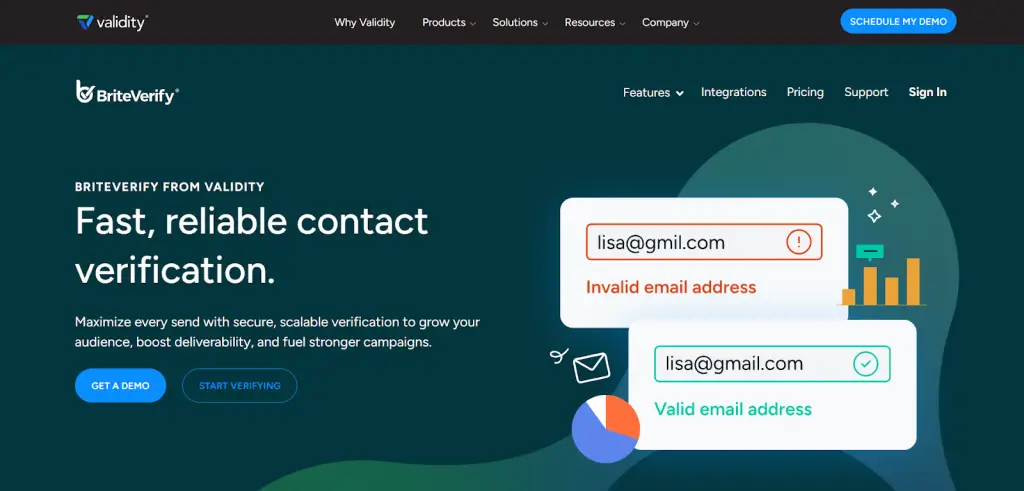
BriteVerify, part of Validity, is known for its speed, ease of use, and built-in integrations, all of which make list hygiene easier to maintain. The real-time API catches bad addresses as people submit them on forms or landing pages. Blocking invalid, disposable, and mistyped emails at entry prevents bounce spikes later and keeps your sender reputation healthy across campaigns.
Pros
- Simple workflow with bulk uploads and an easy API.
- Integrations that let you validate inside existing ESPs and CRMs.
- Transparent pricing with pay-as-you-go options visible on comparison pages.
Cons
- Some reviewers report accuracy variance on certain domains or edge cases, so catch-alls and “unknowns” may need sending rules.
- Large uploads can process more slowly at times, which may affect tight timelines.
Bouncer
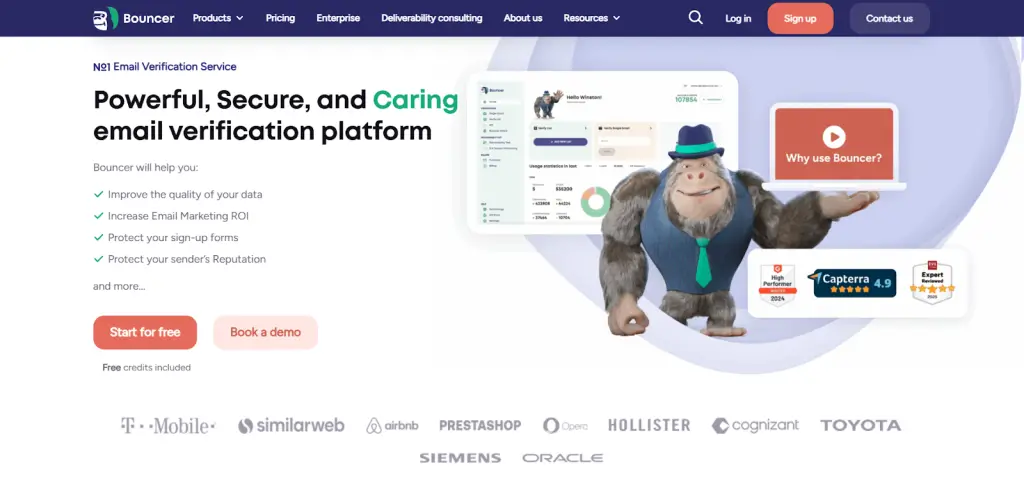
Bouncer helps teams lower hard bounces and protect sender reputation by cleaning invalid, disposable, and risky emails before a send. The platform’s Deliverability Kit lets you test inbox placement, verify authentication, and monitor blocklists in one place. This gives you a pre-send read on risk and a way to confirm that verification work is paying off before you ramp volume.
Pros
- Easy bulk and real-time verification with clear results.
- Integrations and automation options help keep lists clean week after week.
- Solid accuracy and performance at higher volumes, with reviewers calling out measurable bounce reductions.
Cons
- Some third-party tests have noted interface slowness and extra steps to export results.
- You will still need a clear policy for catch-all or unknown results on high-stakes campaigns.
EmailListVerify
EmailListVerify improves deliverability with its fast processing on large files and simple keep-or-remove results. The platform uses a multi-step verification process designed to flag spam traps and identify catch-all domains, which reduces the unknowns that often cause bounce spikes and hurt sender reputation. If you send at volume, this deeper screening helps you handle risky segments more safely before launching a campaign.
Pros
- Real-time API at capture blocks bad addresses before they enter your CRM.
- Straightforward bulk cleaning with clear keep or remove outputs.
- Competitive pricing aimed at frequent verification.
Cons
- Support quality and advanced analytics are more limited than some enterprise tools.
- Catch-all results still require sending policy or testing since no verifier can fully confirm them without mail flow.
GMass
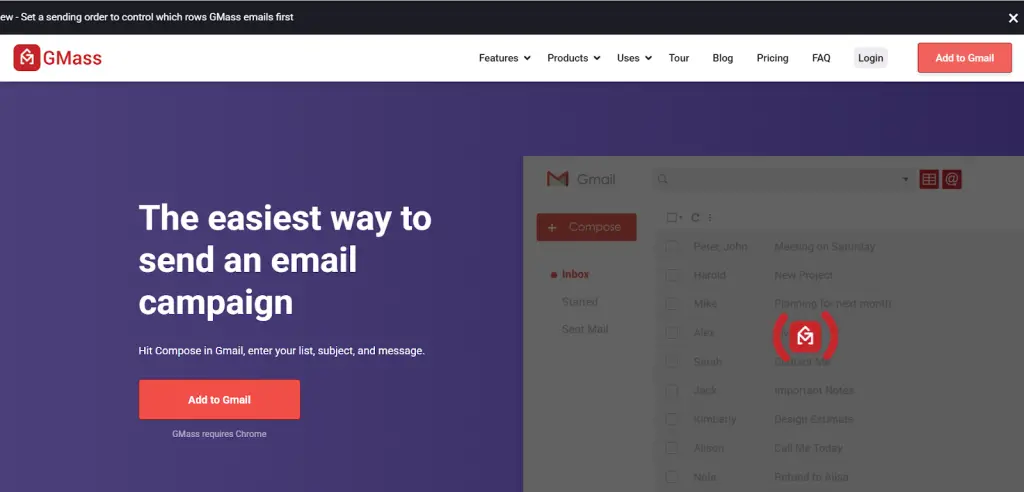
GMass improves inbox placement by pairing Gmail-native sending with built-in testing tools. Before launching, you can send your actual merged email to a network of test inboxes across multiple providers and see exactly where it lands. The results show inbox versus promotions versus spam placement, along with suggestions for what to adjust. This early warning catches problems before you burn a send on a flawed template or setup.
Pros
- Gmail-native workflow with deliverability optimization steps like auto bounce and unsubscribe handling.
- Actionable pre-send testing through Spam Solver and the free Inbox, Spam, or Promotions tool.
- It is a strong fit for teams sending from Gmail who want quick testing and sending in the same place.
Cons
- GMass’s former warm-up service has ended, so warming strategies rely on testing, pacing, and best practices rather than automated warm-up.
- Best results are tied to Gmail. If your stack is built around other providers or multichannel sequences, you may want broader tooling.
Final Thoughts
Sending more emails isn’t the answer to closing more deals. You’ll see better results by making sure the emails you already send actually reach the inbox. That’s where email verification makes the difference.
For most sales teams, the best move is to start with the basics: verify your list before you hit send, remove invalid addresses regularly and monitor your bounce rates. From there, you can build out a more sophisticated email strategy that protects your sender reputation long term.
Email verification works best when it’s part of a larger outreach system. Tools like Instantly combine verification with email warmup and campaign management, so you’re not just cleaning your list but actively improving deliverability across every send. Ready to stop losing deals to the spam folder? Try Instantly and see how many more replies land in your inbox.
