C and C++ still sit underneath the software almost everyone runs every day. Operating systems, databases, browsers, game engines, embedded firmware, and the runtimes for higher-level languages are written in one or the other. Learning them well pays off for decades, and the fastest way to learn them well is still a good book worked cover to cover.
This guide ranks the best C and C++ programming books for 2026 across three stages: complete beginner, working intermediate, and advanced. For each pick you get who it is genuinely for, what it covers, an honest reason to skip it, and a link to check the current price on Amazon. We weighed each book on the same scale in June 2026, so the picks reflect which editions are actually in print and worth buying today.
Our top picks at a glance
Short on time? These five cover most readers. The full list and the reasoning behind each pick follow below.
- Best overall for C: The C Programming Language (K&R). The canonical book every serious C programmer eventually owns.
- Best for absolute beginners (C): Head First C. A visual, hands-on way into the language with no prior experience.
- Best to learn C++ from scratch: Programming: Principles and Practice Using C++. The most current book here, written by the creator of C++ and updated for modern standards.
- Best comprehensive C++ tutorial: C++ Primer. The thorough, example-driven path from competent to fluent.
- Best for leveling up your C++: Effective Modern C++. The highest-value read once you already know the basics.
How we picked these books
A “best book” depends entirely on where you are. A reference that experts swear by will bury a first-week beginner, and a gentle visual primer will frustrate someone who already ships code. We ranked on four things:
- Teaching fit. Does the book match a real skill stage, and does it teach in a way that stage can follow?
- Currency. Which C or C++ standard does it actually cover? In 2026 you should know whether a book stops at C89 or C++11 before you pay for it.
- Edition still in print. We link the latest edition that is actually buyable, not an out-of-print printing.
- Track record. Reputation among working engineers and educators, and reception from readers over time.
One thing worth knowing up front: several classics in this list predate the newest C++ standards. They are still excellent for the fundamentals, but if your goal is specifically C++20 or C++23 features, we flag that in the relevant picks so you do not buy the wrong tool.
C and C++ programming books compared
The whole list at a glance. Levels are a guide, not a wall; plenty of readers cross between them.
| Book | Language | Best for | Edition | Year | Pages |
|---|---|---|---|---|---|
| The C Programming Language | C | Intermediate | 2nd | 1988 | 272 |
| Head First C | C | Beginner | 1st | 2012 | 629 |
| Let Us C | C | Beginner | 19th | 2022 | 508 |
| Programming in ANSI C | C | Beginner (academic) | 8th | 2019 | 596 |
| C: The Complete Reference | C | Intermediate reference | 4th | 2000 | 800 |
| The C++ Programming Language | C++ | Advanced reference | 4th | 2013 | 1376 |
| Modern C++ Design | C++ | Advanced | 1st | 2001 | 352 |
| C++ Primer | C++ | Beginner to intermediate | 5th | 2012 | 976 |
| Programming: Principles and Practice Using C++ | C++ | Beginner | 3rd | 2024 | 656 |
| Effective Modern C++ | C++ | Intermediate to advanced | 1st | 2014 | 334 |
1. The C Programming Language, 2nd Edition
Often just called K&R after its authors, this is the book that defined how C is taught and written. It is terse, precise, and every example earns its place.
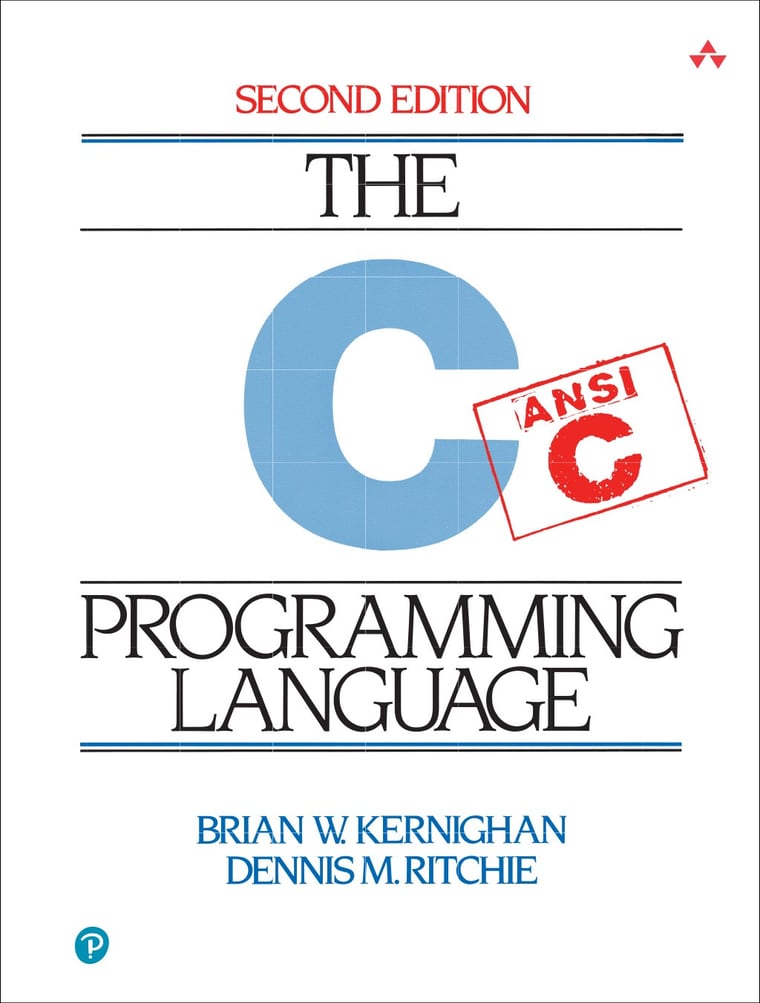
Who it is for: programmers who already grasp the basics of coding and want to understand C the way its designers intended, plus anyone who wants to see how a great technical book is written.
Skip it if: you have never programmed before. K&R moves fast, assumes you will do the exercises, and covers the language as it stood at the ANSI C standard, so you will not find C11 or C17 features here.
- Authors: Brian W. Kernighan and Dennis M. Ritchie
- Edition: 2nd, the latest
- Published: 1988
- Pages: 272
- Price: usually around $45 to $70, check the current price on Amazon
2. Head First C
The opposite of K&R in style. Head First C teaches through puzzles, diagrams, and small projects, and it genuinely works for people who bounce off dense reference books.
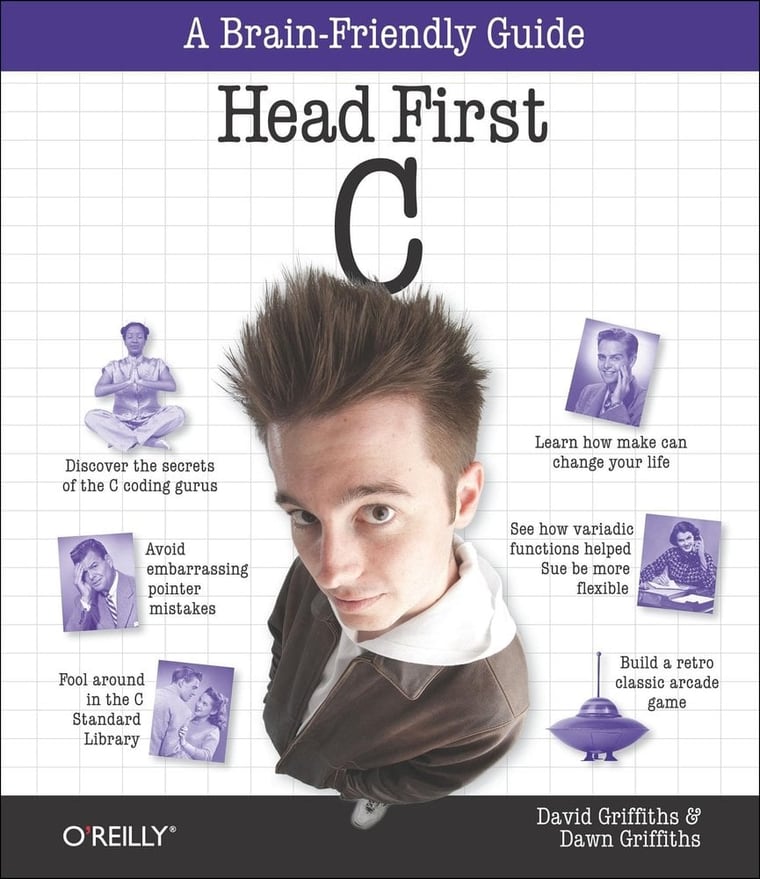
Who it is for: complete beginners and visual learners who want concepts like pointers, the standard library, and network programming explained patiently with worked exercises.
Skip it if: you want a concise desk reference or already write C. The friendly pacing that helps beginners will feel slow, and the book is from 2012, so very recent standard library additions are not covered.
- Authors: David Griffiths and Dawn Griffiths
- Edition: 1st
- Published: 2012
- Pages: 629
- Price: usually around $40 to $55, check the current price on Amazon
3. Let Us C
One of the best-selling beginner C books ever written, with millions of copies sold and a new edition every couple of years. Its strength is gentle, step-by-step pacing aimed squarely at first-time programmers and students.
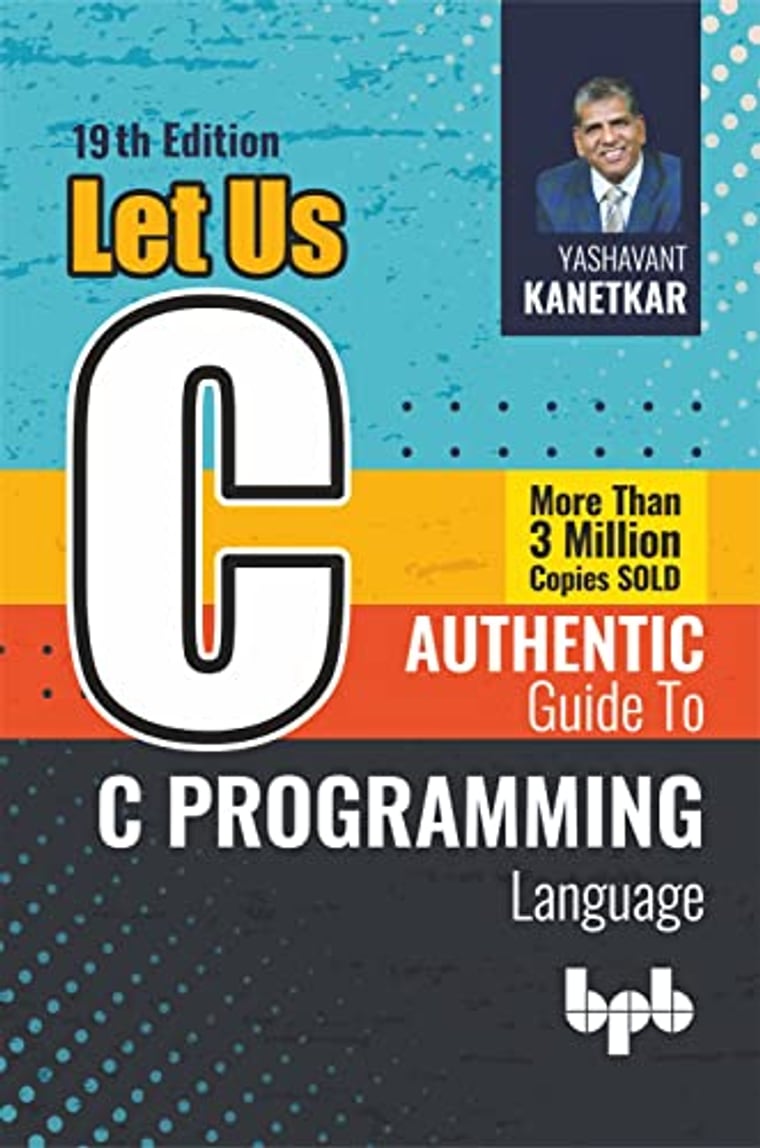
Who it is for: absolute beginners and self-learners who want a structured, easy-to-follow path through C with plenty of exercises. It is especially popular with students in South Asia.
Skip it if: you want a rigorous, standards-first treatment or a concise reference. The teaching style is deliberately informal, which experienced readers can find verbose.
- Author: Yashavant Kanetkar
- Edition: 19th (the title is updated regularly, so check for the newest printing)
- Published: 2022
- Pages: 508
- Price: usually around $20 to $35, check the current price on Amazon
4. Programming in ANSI C
A classroom staple, particularly across Indian universities. Balagurusamy’s textbook takes a formal, exercise-heavy approach that suits readers who learn best from a structured course book.
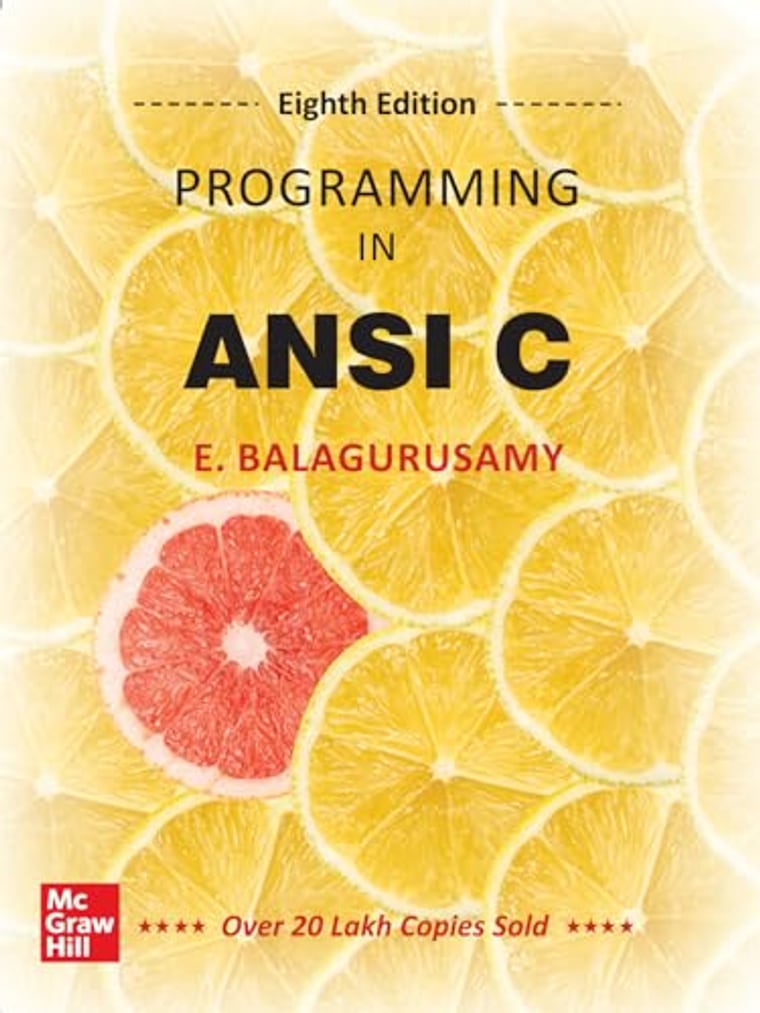
Who it is for: students and self-learners who want a textbook with review questions and worked problems, and a gentle on-ramp to C fundamentals.
Skip it if: you want a practitioner’s book or modern idioms. It is a teaching text, so it favors breadth of basics over depth or real-world engineering practice.
- Author: E. Balagurusamy
- Edition: 8th, the current edition
- Published: 2019
- Pages: 596
- Price: an inexpensive textbook, check the current price on Amazon
5. C: The Complete Reference
A single thick volume that tries to cover the whole language plus the standard library functions. Useful as a desk reference you reach for when you need to look something up rather than read straight through.
Who it is for: learners and developers who want one broad reference covering both the language and its library, with lots of examples to copy from.
Skip it if: you need current-standard coverage. The 4th edition is from 2000 and reflects C89 and C99, so treat it as a working reference for the core language rather than a guide to anything modern.
- Author: Herbert Schildt
- Edition: 4th, the latest
- Published: 2000
- Pages: 800
- Price: usually around $30 to $50, check the current price on Amazon
6. The C++ Programming Language
The authoritative treatment of C++ from the person who created it. The 4th edition covers C++11 in depth, explaining not just the syntax but the design intent behind the language.
Who it is for: experienced developers and system designers who want the deep, authoritative reference and are comfortable with a 1,300-page tome.
Skip it if: you are new to C++ or you need C++20 and C++23 coverage. It is encyclopedic and pitched at people who already program, and it stops at the C++11 standard.
- Author: Bjarne Stroustrup
- Edition: 4th, the latest
- Published: 2013
- Pages: 1376
- Price: usually around $60 to $90, check the current price on Amazon
7. Modern C++ Design
A landmark book on generic programming and policy-based design. It introduced ideas, through the Loki library, that shaped how the C++ community thinks about templates and reusable components.
Who it is for: advanced C++ developers, library authors, and anyone curious about the foundations of template metaprogramming and generic design.
Skip it if: you want current idioms. The book predates C++11, and the standard library has since absorbed many of the techniques it pioneered, so read it for the ideas and history rather than as a modern how-to.
- Author: Andrei Alexandrescu
- Edition: 1st, the only edition
- Published: 2001
- Pages: 352
- Price: usually around $45 to $65, check the current price on Amazon
8. C++ Primer
The most complete tutorial-style path into C++. It teaches modern practices from the start and is detailed enough to take you from your first program to writing idiomatic, standards-aware code.
Who it is for: serious beginners, self-taught developers, and computer science students who want one thorough, example-driven book to learn C++ properly rather than in fragments.
Skip it if: you want a quick start or the latest features. It is nearly 1,000 pages and built around C++11, so it does not cover C++20 or C++23 additions.
- Authors: Stanley B. Lippman, Josee Lajoie, and Barbara E. Moo
- Edition: 5th, the latest
- Published: 2012
- Pages: 976
- Price: usually around $45 to $65, check the current price on Amazon
9. Programming: Principles and Practice Using C++
Stroustrup wrote this to teach programming as a craft, using C++ as the vehicle, rather than to teach the language in isolation. The 3rd edition is the most up-to-date book in this guide and uses recent C++ standards throughout.
Who it is for: complete beginners who want to learn to program from scratch and pick up modern C++ at the same time, taught by the language’s creator.
Skip it if: you already program and only need a reference. This is a learn-to-program course, so experienced readers will move faster with C++ Primer or Effective Modern C++.
- Author: Bjarne Stroustrup
- Edition: 3rd, the latest
- Published: 2024
- Pages: 656
- Price: usually around $60 to $80, check the current price on Amazon
10. Effective Modern C++
Not a textbook but a set of 42 focused guidelines for writing better C++. It is the book that takes someone who knows the syntax and teaches them to use modern features the way experienced engineers do.
Who it is for: developers who already write C++ and want to master move semantics, smart pointers, lambdas, and the rest of the C++11 and C++14 feature set with real understanding.
Skip it if: you have never written C++, or you specifically need C++17, C++20, or C++23 guidance. The advice is excellent but stops at C++14.
- Author: Scott Meyers
- Edition: 1st, the only edition
- Published: 2014
- Pages: 334
- Price: usually around $45 to $60, check the current price on Amazon
How to choose the right C or C++ book
Start with two questions: which language, and what is your current level. C and C++ are related but the learning paths diverge quickly, so pick a book aimed at your stage rather than the most famous title on the shelf.
If you are starting from zero
Pick a book that explains concepts slowly with worked examples and exercises. For C that means Head First C or Let Us C. For C++, Programming: Principles and Practice Using C++ teaches programming from scratch and is also the most current book in this guide, while C++ Primer is the deeper tutorial to grow into.
If you already write code
Move to books that sharpen your model of the language. The C Programming Language rewards anyone who already knows the basics, and C: The Complete Reference works as a single desk reference. On the C++ side, C++ Primer bridges nicely from competent to fluent, and it pairs best with hands-on practice: build small tools, read other people’s code, and keep a deeper reference like The C++ Programming Language within reach.
If you want to master modern C++
Read books that change how you write the language. Effective Modern C++ is the highest-value upgrade for anyone already comfortable with C++, and The C++ Programming Language is the authoritative deep reference from the language’s creator. Modern C++ Design is a fascinating look at generic-programming foundations, though parts of it have been folded into the standard library since it was written.
Should you learn C or C++ first?
Both camps have a point. Learning C first gives you a small language and a clear view of memory, pointers, and how the machine actually works, which makes the rest of C++ less mysterious later. Learning C++ first, with a modern book, gets you productive faster because you lean on the standard library instead of managing memory by hand from day one. If you want the systems-level mental model, start with C. If you want to build applications quickly, start with modern C++.
Whichever you pick, pair the book with real practice. Type the examples, break them, and fix them. A single book worked thoroughly beats five skimmed. If your interests run wider than C and C++, we keep similar roundups for the best Python books, top Java books, the best Rust books, books to learn JavaScript, and the best C# and .NET books to take you further.